
Birds being sneaky
How to (pretend) to not pay attention

Between March to September is nesting bird season. It runs between 1st March to the end of August each year, although there are plenty of species that do actually nest and breed the entire year round- feral pigeons (Columba livia domestica) and barn owl (Tyto alba) to name just a couple either end of the spectrum of charismatic birds.
Climate change is also starting to move the breeding season forward too, and this year the magpies (Pica pica) were nesting by February. Regardless of whether a bird species is a ‘pest’ or not (magpies, pigeons, crows), all wild birds, their eggs and nests are protected, and works should be timed to avoid the main breeding bird season, or nesting bird checks should be undertaken to make sure that no birds or bird nests are harmed by the works.
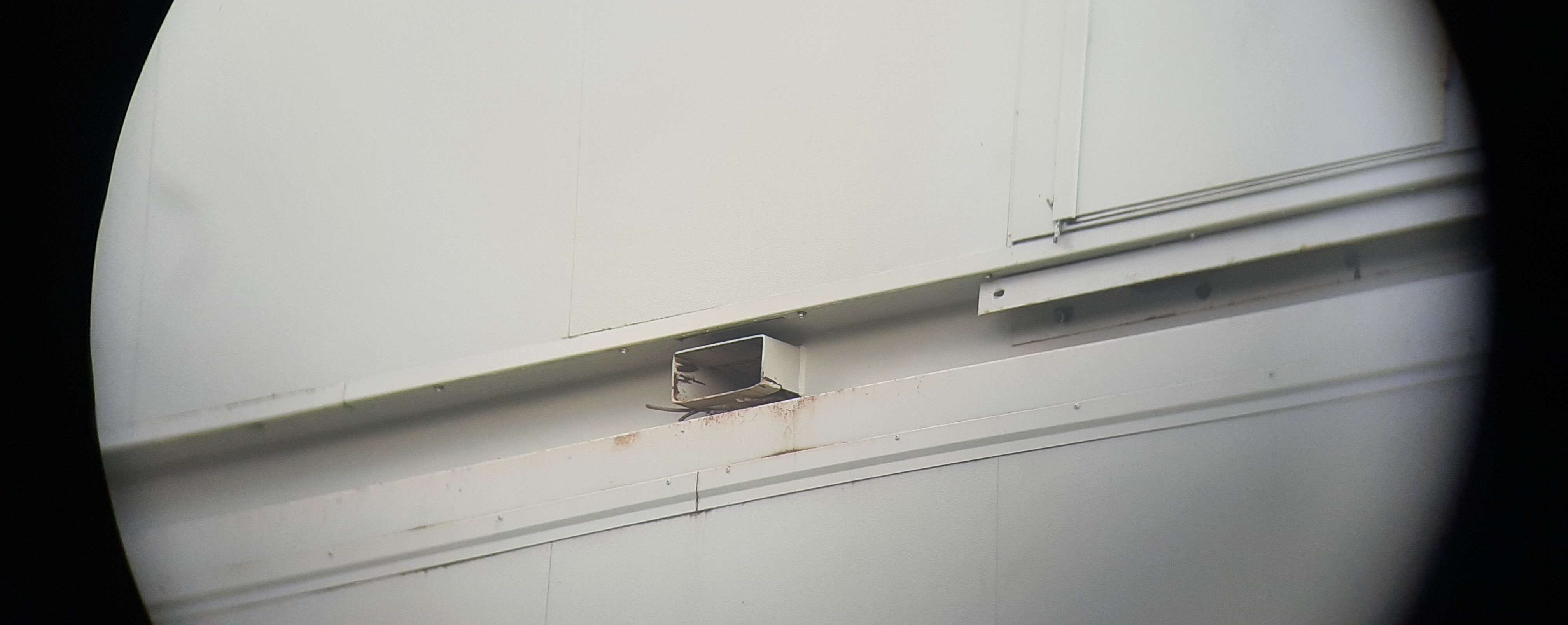
Which is why I’m out on site today. It’s slowly being decommissoned after works have been completed, and one of the last things to go are the portacabins for the temporary works. Downstairs is the canteen, upstairs are offices. These portacabins are stackable, so theoretically you could make a skyscraper of portacabins… although they’ve stopped at two, with metal frames that run throughout holding the upper rooms stable. I think a machine picks each portacabin up by slotting through the hollow frame (as seen in the picture), but that’s just a guess. Anyway, today that’s off the cards, because it’s currently the home of at least one magpie chick.
The contractors have heard it through the walls, and when I shine a torch through the tunnel there’s definitely a nest blocking the far end, but it’s really awkward to see in properly. Either I can look straight through by lying on the stairs at the back of the building, but the tunnel is as long as the portacabin is wide, and it’s unclear what is mud, twig or bird. Or, I can stand underneath the other side, but it’s down a slope. There’s only so far I can get by looking through from the opposite side, so it’s a waiting game sitting amongst nettles to wait for a parent bird to return with food and judge how big the chicks might be inside. Apparently it’s been a couple of weeks since the noises started, so they’re probably almost ready to fledge, but it’s difficult to tell when they’re sitting tight and quiet.
The stakeout lasts a while. There aren’t many good places to hide, and the magpies know something’s up- the adult comes to a nearby oak tree and chac-chac-chacs at my presence, but isn’t going to go anywhere near with a predator (me) waiting for it to reveal its nest, even though I already know where it is. I crouch by long nettles, but they’re barely cover; I can’t see properly when I try and peek around the corner of the portacabin either. This is a silly game of hide-and-seek, but next to where I’ve parked my car are some big industrial skips for waste.
I’ve barely stepped behind the further skip before the adult bird’s in the hole, swooping across the ten-metre gap between trees to portacabin in a blink. A racket goes up; the babies are (always) hungry. And the noise gives me a good indication that they’re not really babies any more, probably ready to leap into the unknown in the next week or so. They spend about a month in the nest before they have their adult feathers, so this timeline makes sense. They’ve picked a pretty bombproof nest, so there’ll be a few more magpies to salute at soon. Those portacabins have got a bit more life left in then at this site yet!
What can I do to help nature?
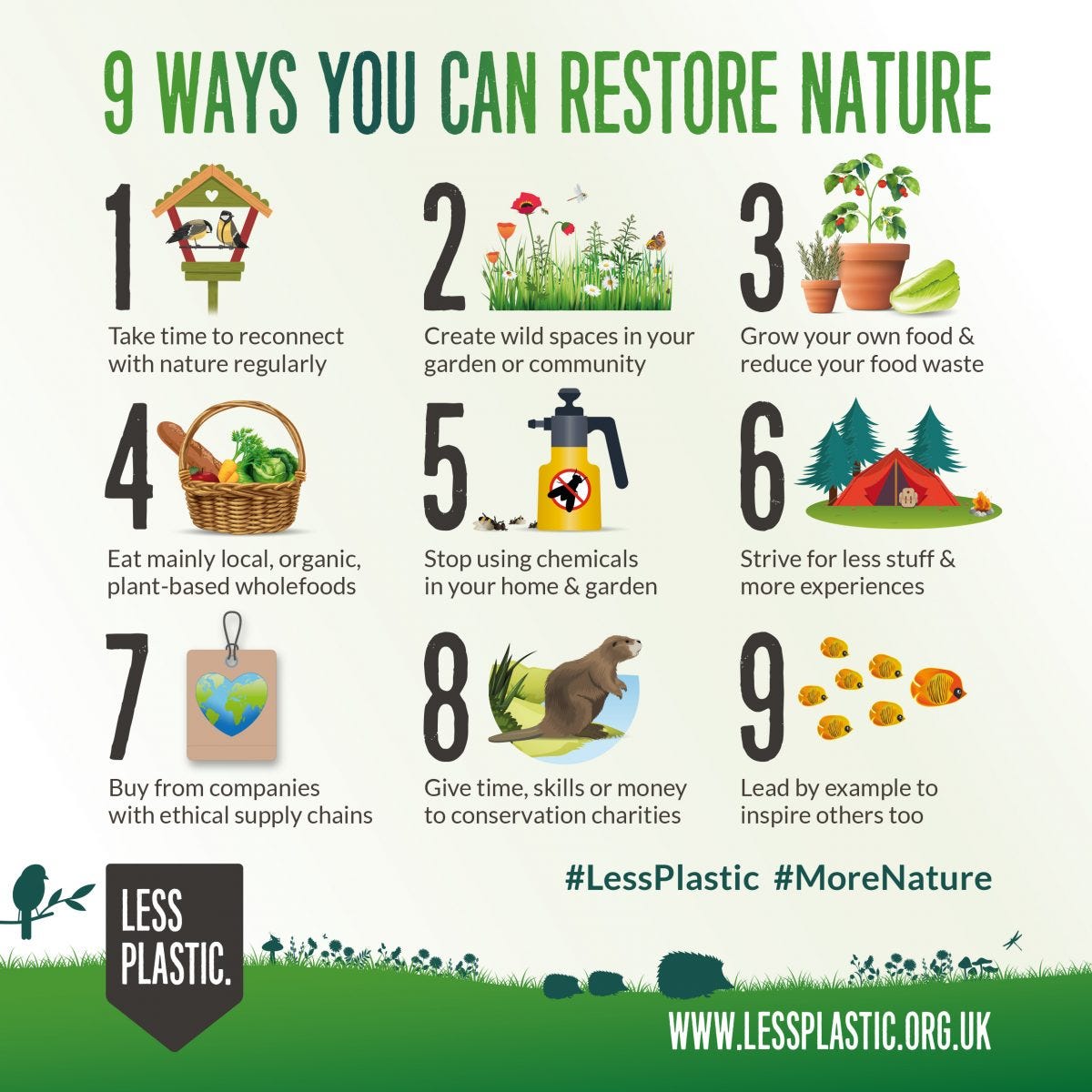
I’m going to leave this graphic from LessPlastic.com as today’s tip, because sometimes these things just hit different when they’re laid out all nicely. And, they’re great ideas to remember!
Welcome to my substack newsletter, Ecology Adventures. As a full-time ecologist, misadventures in nature are the bread and butter of my day to day. Some people find them rather entertaining (as do I, once I actually see a bird). I aim to drop a new letter from the field at least once a month. If you enjoyed this tale, please share it with your friends.