
Pipe Dreams: Two
Wait no, come back!

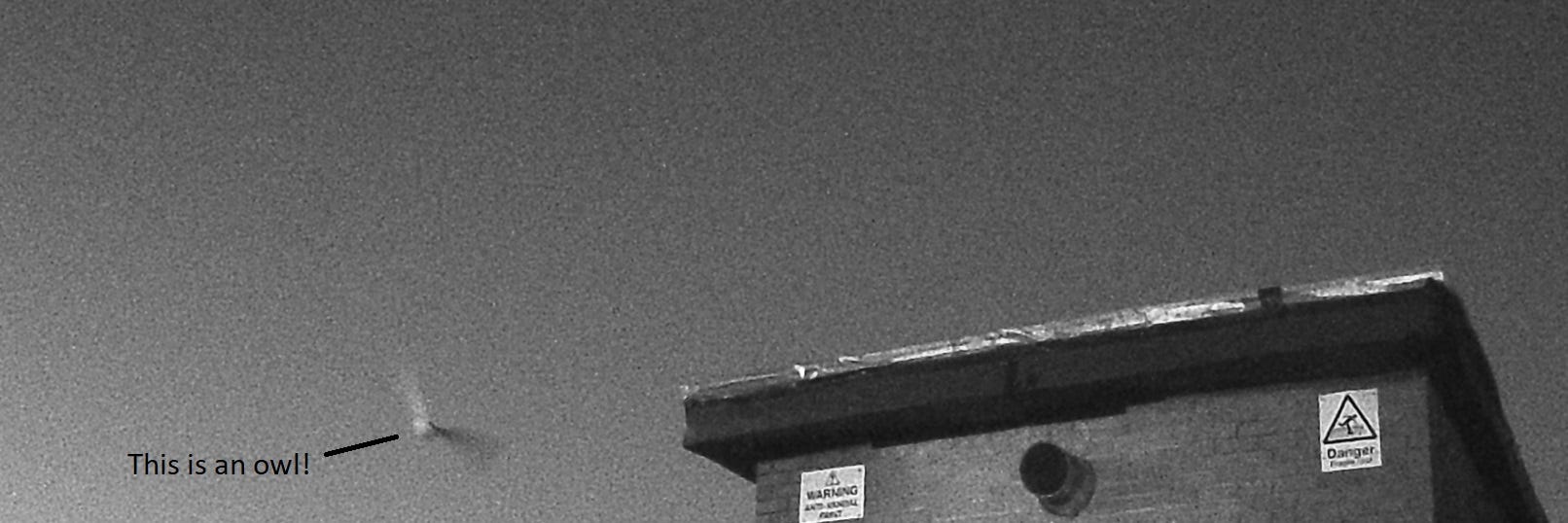
The moment I step out of my car, I know something’s wrong. It’s not just the wind that’s icy cold down my spine, it’s dreadful anticipation. The feeling only mounts as I fumble immediately-frozen fingers on the two gate locks, somewhere in the distance a dull thudding noise. Insistent repetition, BANG, BANG— BANG.
The barn owls (Tyto alba) never did leave the pipe before they had to go into the building to clear out the asbestos- cue me, sitting in the frozen cold of January watching a pipe for hours on end while the asbestos crew did their thing inside. Hazmat suits, gas masks, stuff of nightmares. Asbestos happily evicted, barn owls happily staying put (happily for them, at least; they still need evicting properly in a month’s time, when the building works are due to take place). The building had been gutted, deemed safe, doors barred shut one side with a plank of wood, and back window sealed up with a sheet of MDF.
BANG, BA-BANG, BANG.
I grab my jacket out of the car and race around the side of the main building- the noise is louder now, and it doesn’t take a genius to work out where it’s coming from. The doors are flapping in the wind, crashing shut, swinging open, waving with impunity. The MDF’s been torn away from the other end of the building, a gaping maw through which the wind howls.
The birds are gone. They’re scared away, the noise, the clatter, the disturbance too much. No sign of them in the pipe, no sign of them on the trail camera I’d left watching the pipe to see what their general movements were over the course of each day. No sign of anything on the trail camera for a few days- it’s been tipped flat on its face, wooden stake pulled out of the ground.
When I watch the footage back, there’s nothing. One night the MDF is there, then the camera’s face down the next, carefully set with the sensor against the concrete. When someone picked it up again, days later, the MDF was broken, tipped jaunty in its setting, to crash free when the wind picked up later in the night.
It’s hard work getting the doors to stay closed, but eventually I manage to fashion a wedge out of abandoned bricks and rough-edged concrete. The MDF at the back is a lost cause, too heavy for me to heft on my own, and I have nothing to attach it back to where it was anyway. I leave it propped against the wall, blocking a little of the hole to stop a whisker of the wind’s power, and go home distraught, to write an email asking for the building to be fixed up ASAP.
I’m back again a few days later to inspect the fix. The building’s far from pretty now, but it’s no longer gaping holes and flapping plastic. Quiet, for now.
When I climb the ladder to check the pipe, I can’t describe the relief. I have to sit on the dusty concrete below, surrounded by chips of glass and crushed owl pellets. They’re back.
(And I’m back to square one, trying to evict them again.)
What can you do to help owls?
Do you have a cat? Does it go outside? In a 2013 study on mortality in the US caused by free-ranging cats, an estimate of 1.3–4.0 billion birds and 6.3–22.3 billion mammals annually are killed by cats.
Please, keep your cat inside. If you can’t keep your cat inside all the time, please at least restrict access to the outdoors at night, when they’re even more dangerous to our native wildlife.
Welcome to my substack newsletter, Ecology Adventures. As a full-time ecologist, misadventures in nature are the bread and butter of my day to day. Some people find them rather entertaining (as do I, once the cold has left the deep of my bones). I aim to drop a new letter from the field at least once a month. If you enjoyed this tale, please share it with your friends.